Maximizing Exposure with Digital Billboards in Dubai
Discover how digital billboards in Dubai boost brand visibility. See top DOOH locations and LED screen advertising strategies that deliver results.
by Dergham
26 October 2026 · 6 min read
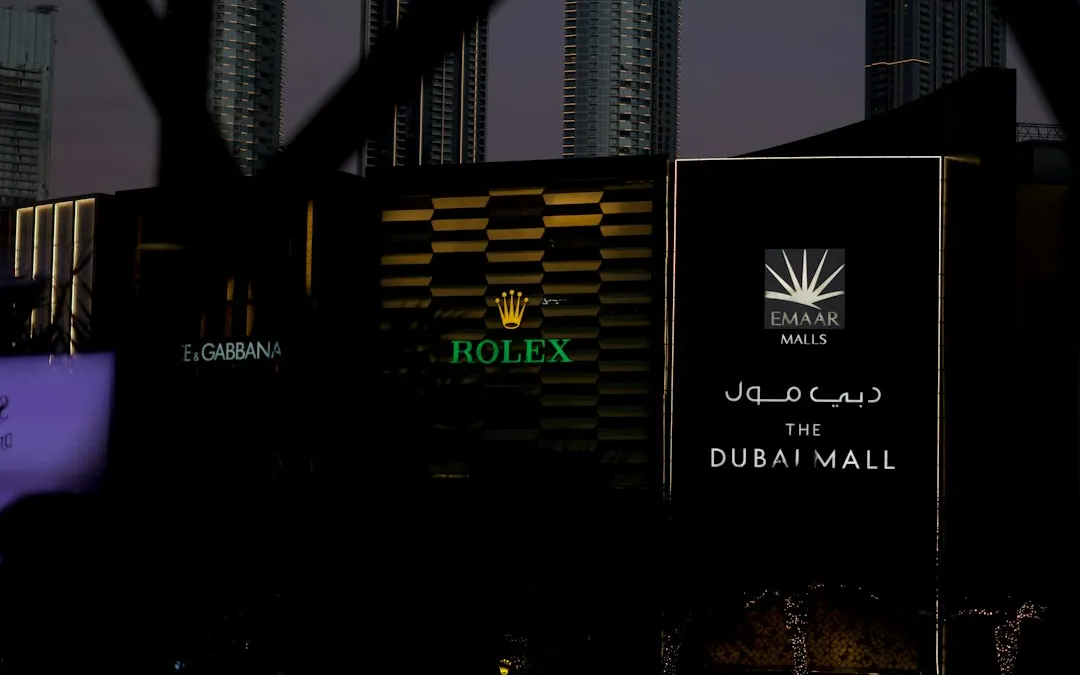
Digital billboards in Dubai maximise brand exposure by combining prime, high-traffic locations with screens that can change creative by the hour, day-part, or weather condition. A single digital billboard Dubai campaign can run several messages across one site, reaching drivers, mall visitors, and transit riders without the production cost of multiple static boards.
That flexibility is why digital has become the default choice for brands chasing visibility in a city built around motorways, malls, and landmark towers. The question isn't whether digital out-of-home works here. It's where to place it and how to use the format properly once it's up.
Why digital billboards outperform static sites in Dubai
A static billboard says one thing for the length of the booking. A digital screen can say several things across a single day, which matters in a market where commuters, tourists, and residents move through the same corridors at different hours for different reasons.
Brands can run a breakfast message for commuters, switch to a retail offer at lunch, and close with an evening promotion, all on the same panel. Agencies can also test creative mid-flight and swap underperforming assets without reprinting vinyl or sending a crew to site. For a market as fast-moving as Dubai's retail and hospitality sector, that turnaround speed is often worth more than the premium digital commands over static.
Where digital screens earn their keep across the city
Location still decides most of a campaign's reach, digital or not. Dubai's outdoor inventory clusters around a handful of zones that carry consistently heavy footfall or traffic, and each has its own audience character.
Major roads and interchanges
Arterial routes such as Sheikh Zayed Road remain the backbone of Dubai outdoor advertising. These corridors carry a mix of daily commuters, business travellers, and long-haul drivers moving between emirates, which makes them useful for brands wanting broad daytime and evening reach rather than a single demographic.
Retail and lifestyle hubs
Areas built around shopping and leisure, including Downtown Dubai, Dubai Marina, and Business Bay, deliver a different kind of exposure. Dwell time is longer, pedestrian traffic is heavier, and audiences are often closer to a purchase decision, which suits retail, F&B, and entertainment advertisers looking for immediate recall rather than pure volume.
Specific site availability and footfall figures vary by location and change as new developments open, so advertisers should always check current inventory before committing a route plan rather than relying on last year's assumptions.
How DOOH advertising Dubai brands use goes beyond a bigger screen
Digital out-of-home is often sold on screen size alone, but the real shift is in how the medium behaves. Modern DOOH advertising Dubai campaigns lean on data and automation in ways static boards simply cannot.
Programmatic buying and real-time triggers
Programmatic DOOH lets advertisers buy screen time in short slots rather than fixed weeks, and trigger creative based on conditions such as time of day, temperature, or traffic flow. A beverage brand might push a cold-drink message when the mercury climbs; a mall tenant might promote an evening offer once footfall data shows the car park filling up. This is targeting by context rather than by assumption.
Dynamic creative across a campaign
Because content updates remotely, one booking can carry a rotating set of messages tailored to the audience passing at that hour. Agencies increasingly plan DOOH alongside mall and transit media so the same campaign narrative follows a commuter from the motorway to the car park to the shopping concourse.
Getting results from LED screen advertising Dubai campaigns
Buying the screen is the easy part. Getting LED screen advertising Dubai campaigns to actually land requires creative built for the format, not a shrunk-down version of a print ad.
- Keep copy short. A driver passing at speed has seconds, not minutes, to absorb a message.
- Use high contrast and bold typography so the ad reads clearly in bright daylight and after dark.
- Avoid dense text blocks. One idea per frame beats three ideas crammed into one.
- Plan for motion sparingly. Subtle transitions draw the eye; overly busy animation competes with the message itself.
- Build a few creative variants from the outset so day-part switching doesn't rely on last-minute production.
Brands that treat digital screens as a creative canvas rather than a billboard with a plug tend to see stronger recall. The format rewards simplicity, repeated at scale, over cleverness that only works up close.
Proving the exposure, not just claiming it
The appeal of out-of-home has always been scale, but digital formats make that exposure easier to measure and defend to a client or finance team. Screen networks can report play counts, dwell estimates for nearby zones, and creative rotation logs, giving media planners a clearer picture of what ran, where, and when.
That data-backed approach matters for agencies managing client budgets across multiple formats. A campaign that pairs a digital billboard on a major interchange with mall screens and transit media can be reported on holistically, rather than as three separate guesses stitched together after the fact.
For brands weighing up where digital fits against other formats, it's worth viewing it as part of a wider mix rather than a replacement for everything else. OOH AE's view of the city's outdoor landscape covers billboards, transit, and mall media together, which is usually the more realistic way to plan reach in a city this spread out.
Building a smarter digital out-of-home plan
None of this works without a route plan grounded in where the target audience actually moves through the day. A campaign aimed at daytime professionals needs a different corridor mix to one chasing weekend retail footfall, even if both sit in the same emirate.
The brands getting the most from digital billboards in Dubai right now are the ones treating placement, creative, and timing as three parts of the same decision, not three separate ones made by different teams. Get that alignment right and the exposure follows. Get it wrong, and even the sharpest screen in the best location ends up talking to the wrong audience at the wrong hour.
Ready to explore the vast OOH opportunities in the UAE?
Author: Dergham
Related articles
Campaigns
Chipotle Launches New Outdoor Advertising Campaign in Dubai
26 October 2026 · 4 min read
by Khuzaima Yamman
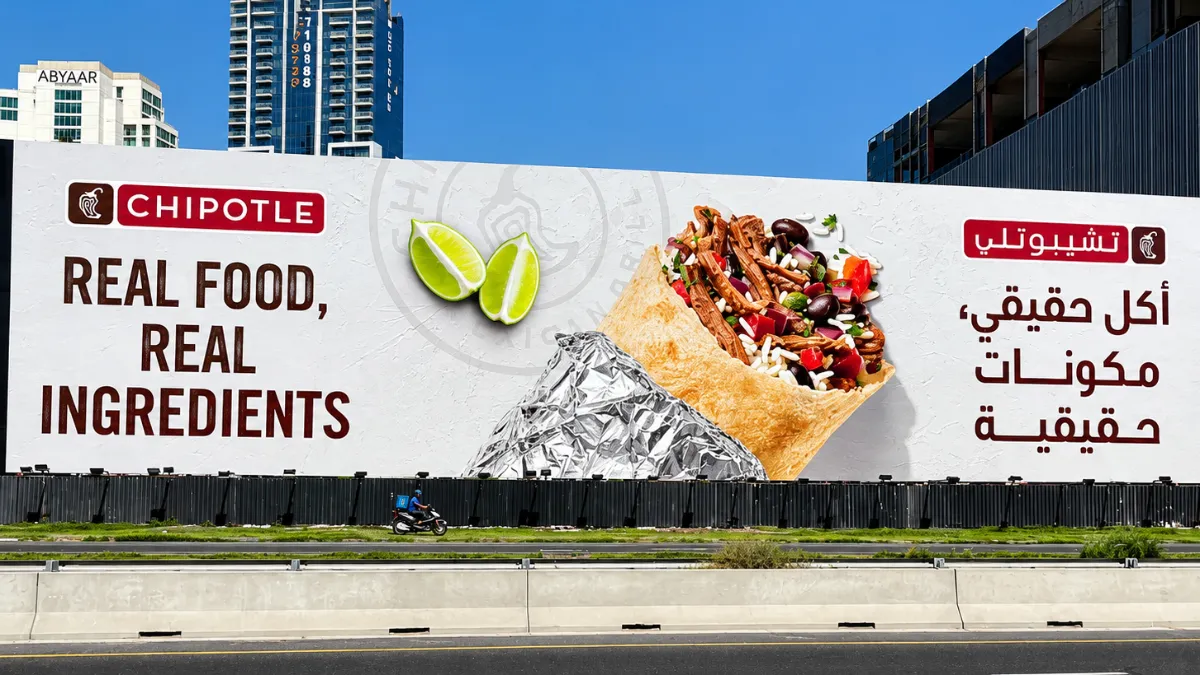
Chipotle launches a new billboard advertising campaign across Dubai, featuring roadside hoardings and wall wraps promoting its burritos, bowls and real ingredients.
Campaigns
Apple Promotes iPhone Duo Across Dubai’s OOH Landscape
12 October 2026 · 5 min read
by Khuzaima Yamman
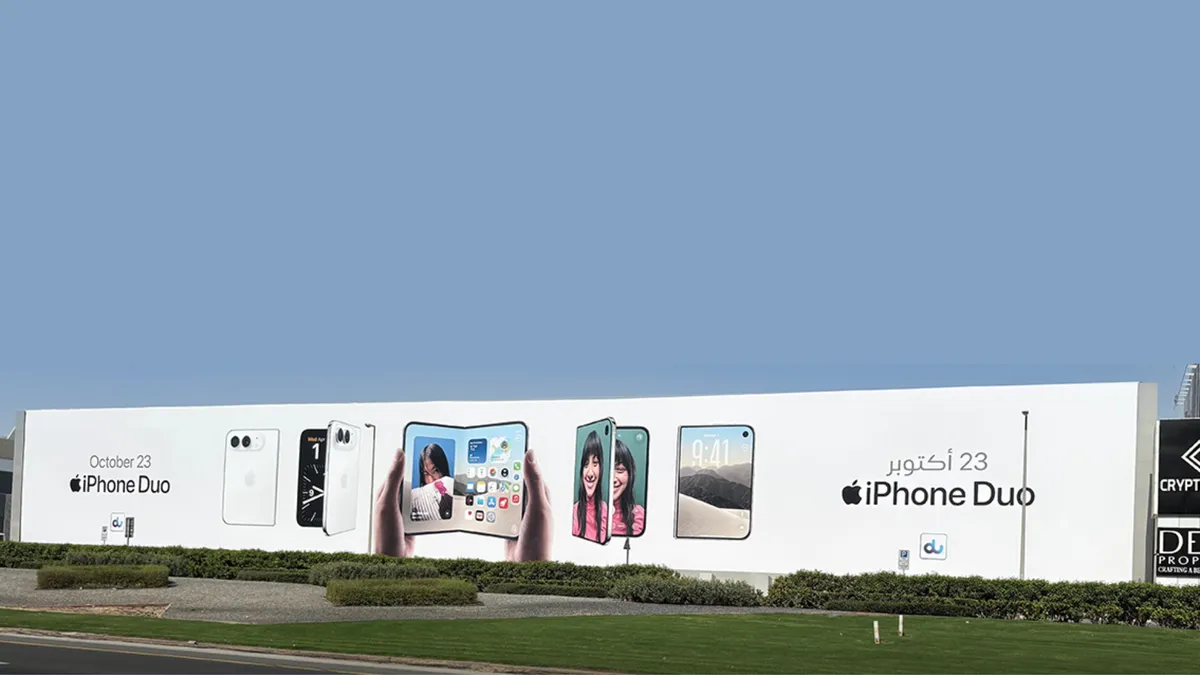
Apple brings the new iPhone Duo to Dubai’s outdoor advertising landscape ahead of its UAE launch on 23 October 2026.
History
The Evolution of Billboard Advertising in the UAE: Trends and Costs
5 October 2026 · 6 min read
by Harith Onigemo
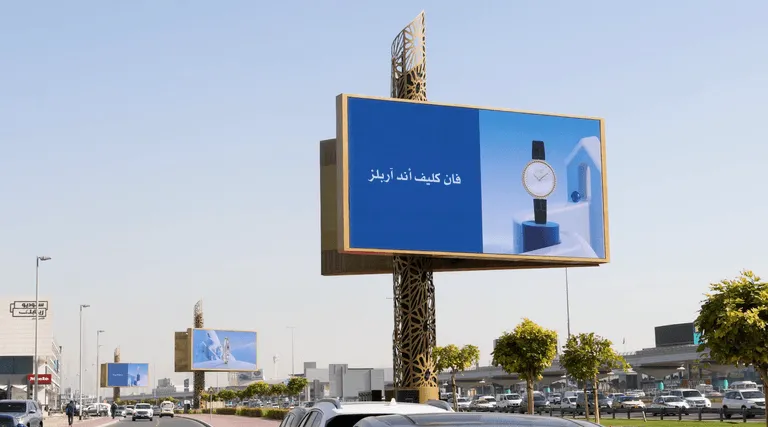
From static billboards to digital screens, discover how billboard advertising in the UAE has evolved, plus the costs brands can expect in Dubai's competitive outdoor advertising market.