How effective are bus ads?
Discover how effective bus ads are, including their high visibility, strong brand recall and limitations as a powerful out-of-home advertising channel.
by Khuzaima Yamman
20 April 2026 · 4 min read
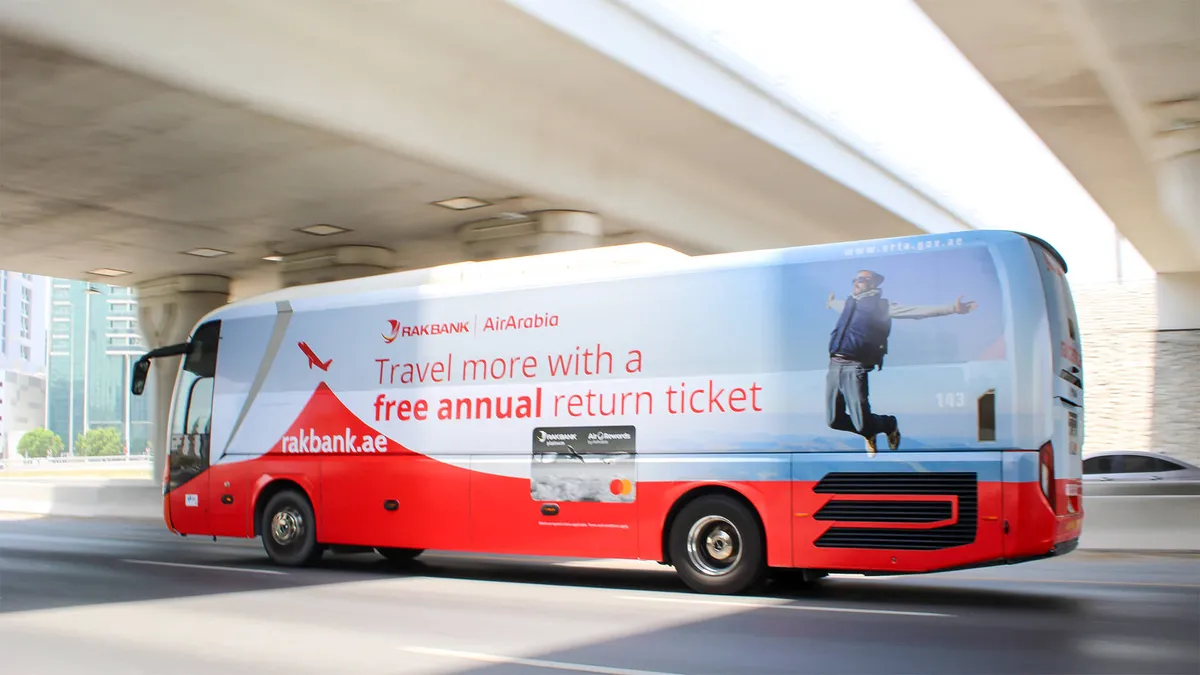
Bus ads are highly effective as a mass-reach branding channel. They turn public transport vehicles into moving billboards that circulate through busy streets, residential zones and business districts. Because buses follow fixed routes and operate daily for long hours, they generate repeated exposure to the same audiences. This repetition is one of the strongest drivers of memory retention in advertising.
Compared to other traditional channels like radio advertising or location-based formats such as taxi advertising and Airpost advertising, bus ads stand out because they combine mobility with large-format visual impact in high-traffic environments.
1. High visibility and reach
The biggest strength of bus advertising is visibility. A single bus can generate tens of thousands of impressions per day, depending on the city density and route coverage. In high-traffic urban areas, this number can increase significantly due to congestion and pedestrian proximity.
Unlike digital ads that can be skipped or blocked, bus ads are physically present in the environment. They are seen by:
- Drivers stuck in traffic
- Pedestrians on sidewalks
- Passengers at bus stops
- Office workers and commuters
This creates constant, unavoidable exposure. In marketing terms, this is known as high share of eye-level attention.
2. Strong brand recall and recognition
Bus ads are particularly strong at building brand recall. Studies in out-of-home advertising consistently show that repeated exposure in public environments improves memory retention.
When people see the same brand repeatedly on buses passing through their daily routes, they begin to recognize it even without actively paying attention. This “passive learning” effect is powerful because it builds subconscious familiarity.
This is why large brands, especially telecom companies, food delivery platforms, banks, and real estate developers continue investing heavily in bus advertising. They are not just trying to get clicks, they are trying to become recognizable.
3. Local targeting advantage
Bus advertising is naturally geo-targeted. Since buses operate within defined routes, advertisers can choose specific areas or neighborhoods to reach relevant audiences.
For example:
- A real estate developer can target buses in growing residential zones
- A restaurant brand can focus on city center routes
- A university or institute can target commuter-heavy corridors
In cities like Dubai, this becomes especially powerful because of structured road networks and high commuter dependency on public transport routes.
4. Cost efficiency
Compared to many other traditional media channels, bus advertising is relatively cost-effective. The cost per thousand impressions (CPM) is generally low because of the high visibility and repeated exposure.
Depending on city and format (full bus wrap, partial wrap, or interior ads), costs can vary. However, the key advantage is that a single placement continues delivering impressions every day without additional spending during the campaign period.
This makes bus ads attractive for:
- Startups building awareness
- Local businesses expanding visibility
- Large brands running citywide campaigns
5. Limitations of bus advertising
Despite its strengths, bus advertising has some clear limitations.
Weak direct conversion tracking
Unlike digital marketing, bus ads do not provide clicks, conversions, or precise attribution. It is difficult to measure exactly how many sales came directly from a bus ad unless tracking tools like QR codes, promo codes, or dedicated landing pages are used.
Short attention span
People usually see bus ads for only a few seconds. If the design is too complex or cluttered, the message may not be understood at all.
Not performance-driven
Bus advertising is not ideal for immediate sales or lead generation. It works at the top of the marketing funnel.
6. Best use cases
Bus ads perform best when used for:
- Brand awareness campaigns
- Product or service launches
- Building local dominance in a city
- Supporting larger digital campaigns
They are especially effective when combined with digital marketing. For example, a user sees a bus ad, later searches the brand on Google, and then converts online. This is called multi-touch attribution, where offline ads influence online behavior.
Ready to explore the vast OOH opportunities in the UAE?
Author: Khuzaima Yamman
Related articles
Advertising Formats

How billboards can increase footfall for businesses
29 June 2026 · 3 min read
by Khuzaima Yamman
Learn how billboard advertising can increase footfall by improving local visibility and encouraging nearby customers to visit your business.
Advertising Formats

Benefits of 3D Billboard Advertising for Brands
29 June 2026 · 4 min read
by Khuzaima Yamman
Discover the benefits of 3D billboard advertising, from attracting attention to supporting product launches and social media sharing.
Advertising Formats

How retail brands Use Billboard Advertising Effectively
29 June 2026 · 3 min read
by Khuzaima Yamman
Learn how retail brands use billboard advertising to build awareness, drive footfall, and connect outdoor campaigns with digital marketing.