Comparing Traditional and Digital Out-of-Home Advertising in Dubai
See how DOOH advertising in Dubai compares to traditional outdoor formats on targeting, reach and campaign impact.
by Dergham
16 November 2026 · 5 min read
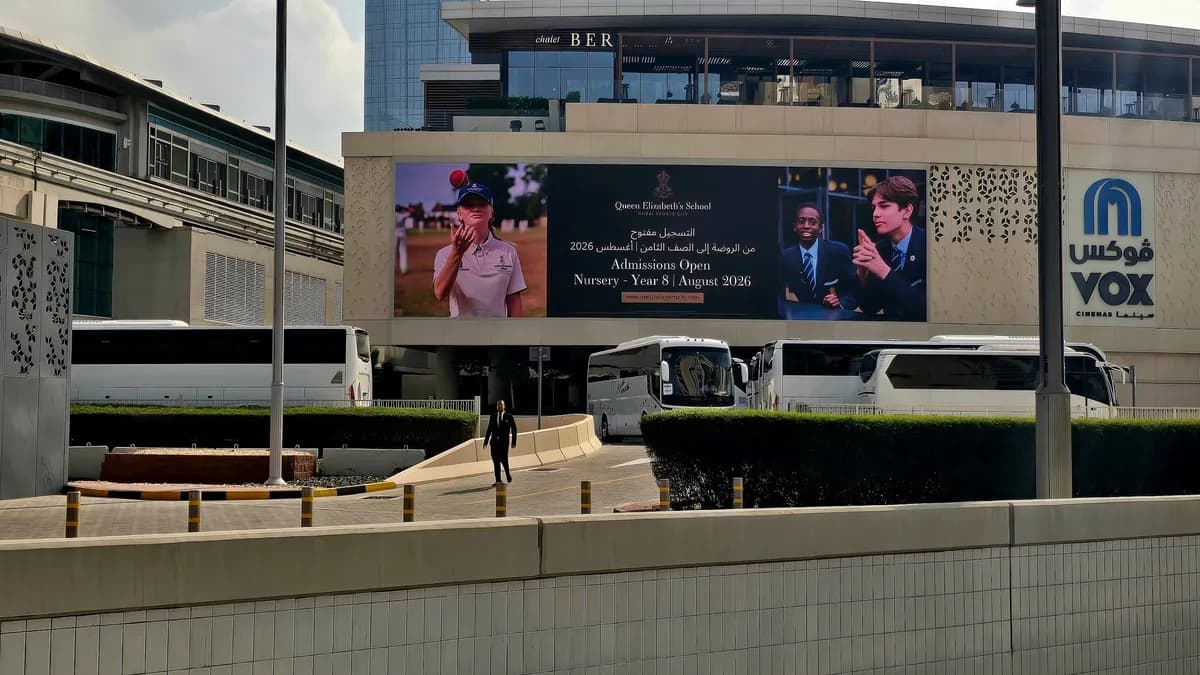
DOOH advertising in Dubai differs from traditional out-of-home in one practical way: a static billboard shows the same message to everyone who passes, while a DOOH advertising Dubai network can change that message by time of day, location and audience segment, giving media buyers sharper targeting and clearer reporting than a printed panel ever could.
For agencies planning a Dubai campaign, that distinction matters more than the marketing language around it. Traditional and digital out-of-home solve different problems in a media plan, and the smartest media plans in this city use both, deliberately, rather than defaulting to whichever format is easiest to book.
What Traditional OOH Still Does Best in Dubai
Traditional formats earn their place through sheer consistency. A static billboard or tram panel delivers the same creative, at the same spot, for the length of the booking, with no technical variable to manage once it is installed. That reliability suits brands that want a single message to sit in front of commuters for weeks at a time.
Transport media is a good example of where static formats hold up well. Dubai Tram platform screen walls and overhead panels inside the tram carriages each carry around 12,000,000 impressions, giving a campaign a steady, high-frequency presence along a route that commuters use daily. The audience is captive for the length of the journey, which is exactly the kind of dwell time a static message benefits from.
Static placements also tend to suit brands with a simple, singular proposition: a product launch date, a store opening, a seasonal offer that does not need to change once it is live. There is no advantage in paying for dynamic flexibility if the message itself never changes.
Where DOOH Advertising Dubai Pulls Ahead
The advantage of DOOH advertising Dubai networks shows up the moment a campaign needs to say something different depending on who is watching, or when.
Real-Time Targeting and Dayparting
A digital screen can run a breakfast-hour message near a business district, switch to an evening offer near a residential cluster, and adjust again for the weekend, all without anyone visiting the site. That kind of dayparting is simply not available on a printed panel. For agencies managing multi-audience campaigns, it turns one screen booking into several effective placements across a single day.
Creative Flexibility Without a Reprint
Traditional OOH ties every creative change to a physical reprint and reinstall. Digital inventory removes that constraint entirely. A creative update can go live the same day, which matters for retail promotions, event countdowns, or any brand that needs to react to something happening in the market.
The residential elevator network shows how big this can scale: 1,956 screens across 785 towers in Dubai and Abu Dhabi run 12-second spots up to 360 times a day per screen, generating 17,189,968 impressions without touching a single piece of hardware.
Comparing Audience Reach Across Formats
Reach looks different depending on the format and the location. Landmark digital screens inside malls, for instance, sit in high-footfall zones where dwell time is naturally longer. A digital screen network at the Dubai Mall Aquarium or the Dubai Mall Mega Ice Rink each carries around 110,500 impressions, similar to the Dubai Marina Yacht Club digital network and Dubai Marina Mall's own screen network. An LED display at Oud Metha runs close to 115,000 impressions. These are smaller numbers than a transit network, but the audience is often more dwell-rich and better suited to detailed creative.
The table below sets out how the two approaches compare on the factors that matter most to a media buyer.
| Factor | Traditional OOH | DOOH Advertising Dubai |
|---|---|---|
| Targeting | Fixed message, fixed location | Dayparting and audience-led switching |
| Creative changes | Print and reinstall per update | Remote upload, live same day |
| Example reach | Dubai Tram platform screens, 12,000,000 impressions | Residential elevator network, 17,189,968 impressions across 1,956 screens |
| Measurement | Modelled from traffic and footfall counts | Time-stamped play logs |
Neither column wins outright. A transit static panel still delivers a larger single-format reach number than most individual digital placements, but a DOOH network spread across hundreds of towers or screens can outscale it, while also giving the buyer the option to change the message as the campaign runs.
Flexibility Media Agencies Can Plan Around
Flexibility is the practical reason agencies lean into DOOH advertising Dubai inventory for campaigns with more than one phase. A retail client launching a seasonal range can open with an awareness message, switch to a countdown in the final week, and close with a last-chance line, all on the same booked screens. Doing the same thing with static panels would mean three separate production runs and three separate install visits.
That said, flexibility has a cost if it is not planned properly. Agencies should agree creative change windows with the media partner before the campaign starts, not mid-flight, so that dayparted or dynamic content is approved and ready rather than rushed. It is also worth confirming how often play logs are shared, since that reporting is one of the clearest advantages digital inventory has over static.
Building a Media Mix That Uses Both
The strongest Dubai OOH plans rarely pick one format over the other. A transit static placement can anchor a campaign with sheer frequency, while a digital network layered on top carries the dayparted or location-specific version of the same message. Mall-based digital screens then add a high-dwell moment where the audience has time to absorb more detail than a passing commuter ever would.
For media agencies briefing a Dubai campaign, the real decision is which job each format is being asked to do, and whether the budget supports giving both the space to do it. Agencies weighing up a mixed plan should talk to a Dubai-based media partner early, while there is still time to shape the booking around the campaign's phases rather than fitting the campaign around whatever inventory happens to be free.
FAQs
Does DOOH advertising cost more than traditional billboards in Dubai?
No, the article doesn't quote specific prices for either format. It frames the choice around flexibility rather than cost: digital screens avoid the reprinting and reinstalling costs tied to updating a static billboard, while static panels suit a single message that won't change. Budgets should be built around how many creative versions a campaign genuinely needs, not which format looks cheaper on paper.
Can a brand run a flash sale or time-limited offer effectively using out-of-home advertising?
Yes, this is where digital out-of-home has a clear edge. Because DOOH creative updates go live the same day without any reprinting, a digital screen booking can carry a countdown message or a flash sale that changes daily. A static billboard can still promote a sale, but any change to the offer needs a fresh reprint and reinstall, which rules out last-minute adjustments.
Does screen location affect how much audience reach a campaign gets, and does that affect pricing?
Yes, reach varies sharply by location and format. Dubai Tram platform and overhead panels each carry around 12,000,000 impressions, while individual mall screens, such as those at the Dubai Mall Aquarium or Oud Metha, sit closer to 110,000 to 115,000 impressions. Higher-reach networks typically justify a larger media investment, so location should shape the budget as much as the format itself.
Is traditional static OOH still worth booking if digital screens are available?
Yes, when the campaign's message doesn't need to change once it's live, such as a single launch date or an ongoing seasonal promotion. The article notes these campaigns don't benefit from digital's flexibility if there's nothing to update, so a static billboard or tram panel does the job just as well, often at a more predictable cost through the booking period.
Ready to explore the vast OOH opportunities in the UAE?
Author: Dergham
Related articles
Analysis
Comparing Traditional and Digital Out-of-Home Advertising in Dubai
16 November 2026 · 5 min read
by Dergham
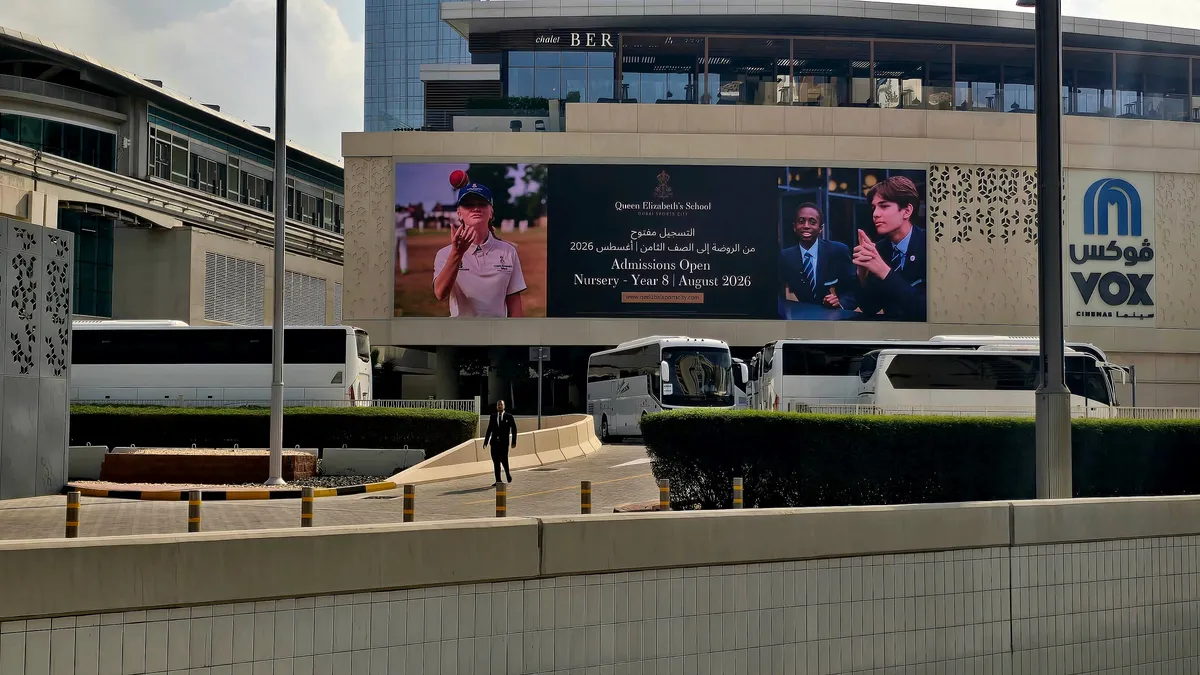
A side-by-side look at DOOH advertising in Dubai and traditional out-of-home formats, comparing targeting precision, audience reach and flexibility for media buyers planning Dubai campaigns.
Advertising Formats

Comprehensive Guide to Bus Advertising in Dubai
9 November 2026 · 7 min read
by Harith Onigemo
A practical guide to bus advertising in Dubai: how it works, why it outperforms other transit formats for brands, and proven tips for designing bus ads that capture attention on the city's roads.
Cost
Evaluating the Cost of Outdoor Advertising in Dubai
9 November 2026 · 6 min read
by Dergham
A clear breakdown of what shapes outdoor advertising Dubai costs, from billboards to digital screens, helping brands understand pricing variations by format and location before planning a campaign.