How Do Bus Ads Work?
Learn how bus ads work, including advertising formats, booking process, audience reach, and why bus advertising is a powerful ooh marketing channel.
by Khuzaima Yamman
20 April 2026 · 5 min read
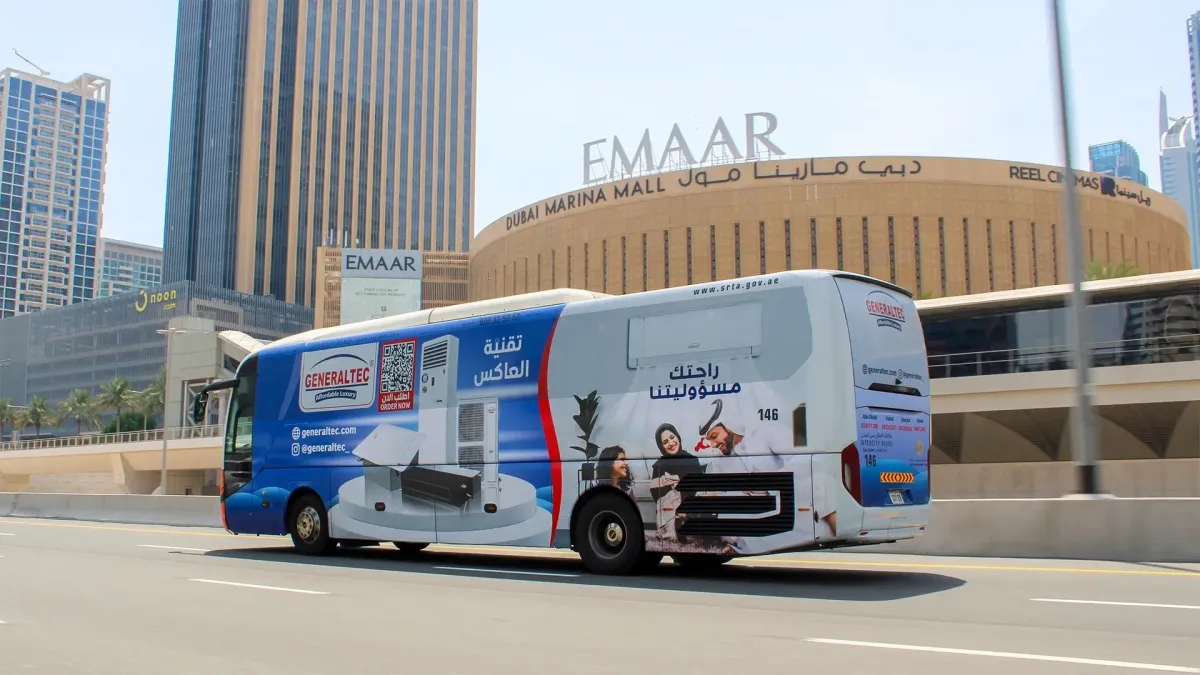
Bus advertising (also called transit advertising) is a form of out-of-home (OOH) marketing where brands place promotional messages on buses or inside them to reach people in real-world environments. It sits within broader transport advertising and metro advertising ecosystems. It is one of the oldest and most effective forms of physical advertising because it combines mobility, repetition, and high visibility in densely populated areas.
To understand how bus ads work, it helps to break the system into four parts: ad formats, booking process, installation, and audience exposure.
1. Types of Bus Advertising Formats
Bus ads come in several formats, each offering different levels of visibility and cost.
Exterior full bus wraps are the most impactful. In this format, the entire bus is covered with a printed vinyl design. This turns the bus into a moving billboard.
Side panel ads are placed on the sides of buses. These are less expensive than full wraps but still highly visible, especially in traffic or at bus stops. They are commonly used for local campaigns or shorter budgets.
Rear bus ads are placed on the back of the bus. This is one of the most valuable positions because cars and pedestrians often look directly at the back of vehicles in traffic. Rear ads are especially effective in congested cities where buses stop frequently.
Inside the bus, there are interior posters and digital screens. Interior ads target passengers who spend several minutes inside the bus. Since these people are in a captive environment, they are more likely to read detailed messages, such as promotions, app downloads, or service explanations.
There are also bus shelter ads, which are placed at bus stops. While not on the bus itself, they are part of the same transit advertising ecosystem and help reinforce messaging before passengers even board.
2. How Bus Ads Are Booked
The booking process usually involves either a city transport authority or an outdoor advertising agency that manages transit inventory. In cities like Dubai, agencies partner with transport operators to control available ad spaces.
The process begins by selecting the campaign objectives. A brand decides whether it wants city-wide visibility, targeting of specific neighborhoods, or exposure along certain routes such as business districts or shopping areas.
Next, advertisers choose the format such as full wrap, side panel, rear ad, or interior placement. Each option has different pricing based on visibility and demand.
Campaign duration is also selected at this stage. Most bus ad campaigns run for a minimum of two to four weeks, but many brands choose longer durations of one to three months to ensure repeated exposure.
After booking, the advertiser submits creative artwork. The design must follow strict guidelines because it will be printed on large vinyl sheets and applied to a moving vehicle. Simplicity is key since viewers usually see the ad for only a few seconds at a time.
3. Production and Installation
Once the design is approved, it is printed on durable vinyl material designed to withstand sun, rain, dust, and movement. This is important because buses operate daily under harsh outdoor conditions.
Professional installers then apply the vinyl to the bus surfaces. Full wraps can take several hours per vehicle. The installation must be precise to ensure alignment across panels, doors, and curves of the bus body.
After installation, the buses continue their regular routes, effectively turning into mobile advertising units.
4. How Bus Ads Reach People
The effectiveness of bus ads comes from constant exposure. Unlike digital ads that depend on user clicks, bus ads rely on visibility and repetition.
Buses travel through fixed routes that often cover residential neighborhoods, highways, business districts, and shopping areas. This means the same ad is seen by different groups of people throughout the day.
For example, a commuter might see a bus ad while driving to work in the morning, again during lunch traffic, and once more in the evening. This repeated exposure increases brand recall significantly.
Each bus can generate thousands of “opportunities to see” per day. Even though not everyone consciously notices the ad, repeated exposure builds familiarity over time.
5. Measurement and Effectiveness
Bus advertising does not provide direct tracking like online ads, but performance is estimated using industry metrics.
The most common metric is OTS (Opportunity to See), which estimates how many people could potentially view the ad. This is calculated based on traffic data, pedestrian density, and route popularity.
Brands also measure reach (how many unique people are exposed) and frequency (how often they see the ad).
To evaluate success, businesses often look at indirect indicators such as increases in website traffic, branded search queries, store visits, or sales during the campaign period.
6. Why Businesses Use Bus Ads
Bus advertising is popular because it offers wide local reach at a relatively stable cost. It is especially effective for brand awareness campaigns, product launches, and location-based marketing.
It also has a strong psychological advantage: it is hard to ignore. Unlike digital ads that can be skipped or blocked, bus ads exist in physical space, making them more memorable.
However, they also have limitations. They cannot target individuals precisely, and performance attribution is less direct than digital marketing.
Ready to explore the vast OOH opportunities in the UAE?
Author: Khuzaima Yamman
Related articles
Advertising Formats

How billboards can increase footfall for businesses
29 June 2026 · 3 min read
by Khuzaima Yamman
Learn how billboard advertising can increase footfall by improving local visibility and encouraging nearby customers to visit your business.
Advertising Formats

Benefits of 3D Billboard Advertising for Brands
29 June 2026 · 4 min read
by Khuzaima Yamman
Discover the benefits of 3D billboard advertising, from attracting attention to supporting product launches and social media sharing.
Advertising Formats
How retail brands Use Billboard Advertising Effectively
29 June 2026 · 3 min read
by Khuzaima Yamman
Learn how retail brands use billboard advertising to build awareness, drive footfall, and connect outdoor campaigns with digital marketing.