How do digital ads work?
Learn how digital ads work, including campaign setup, audience targeting, real-time bidding, ad delivery, tracking, and optimization.
by Khuzaima Yamman
20 April 2026 · 4 min read
Digital ads work by connecting advertisers (brands) with audiences (users) across websites, apps, search engines, and social media platforms. Unlike traditional advertising methods like ooh advertising, out of home advertising, outdoor advertising, and billboard advertising, digital ads are highly targeted, measurable, and optimized continuously using performance data. Here’s a clear breakdown of how the system works.
1. Advertiser sets up a campaign
A business starts by creating a campaign on platforms like Google Ads or Meta Ads.
The advertiser defines the core structure of the campaign, including:
- Goal: This could be driving website traffic, generating leads, increasing sales, or building brand awareness
- Audience: They select who should see the ads based on age, gender, location, interests, and online behavior
- Budget: They decide how much money to spend daily or for the full campaign
- Ad format: This includes text ads, image banners, video ads, carousel ads, or interactive formats
At this stage, the entire advertising strategy is set up so the system knows what success looks like and who to target.
2. Targeting the right audience
Digital advertising relies heavily on user data. Platforms continuously collect signals from user activity such as:
- Search history
- Websites visited
- App usage behavior
- Interests and engagement patterns
- Previous purchases or interactions
This data helps platforms understand user intent and preferences.
For example, if someone searches for “running shoes” or visits sports websites, they are categorized as interested in fitness or footwear. Later, they may see ads for shoes on YouTube, Instagram, or other websites. This is called behavioral targeting, and it ensures ads are shown to users who are most likely to engage.
3. Real-Time Bidding (RTB)
When a user opens a website or mobile app, an automated process called real-time bidding (RTB) takes place in milliseconds.
Here’s what happens:
- The page sends a request to an ad exchange
- Multiple advertisers instantly bid to show their ad to that user
- Each advertiser competes based on how valuable they think the impression is
The winner is selected based on:
- Bid amount (how much they are willing to pay)
- Ad relevance (how closely the ad matches the user’s interest)
- Predicted performance (likelihood of click or conversion)
This process is powered by advertising technologies such as demand-side platforms (DSPs), supply-side platforms (SSPs), and ad exchanges. All of this happens so quickly that the webpage loads normally without delay.
4. Ad is displayed
Once the auction is complete, the winning ad is shown to the user.
Ads can appear in many places, including:
- Search engine results pages (search ads)
- Websites (display or banner ads)
- Social media feeds
- Mobile applications
- Video platforms (pre-roll, mid-roll, or post-roll ads)
The ad is delivered instantly in the available ad space, matching the user’s device and context.
5. User interaction
After the ad is displayed, users may interact with it in different ways:
- Click the ad → taken to a landing page or website
- View the ad → counted as an impression
- Ignore the ad → still recorded for performance tracking
Even if a user does not click, repeated exposure helps build brand awareness, which influences future buying decisions. This is why impressions are still valuable in digital marketing.
6. Tracking & optimization
One of the biggest advantages of digital advertising is measurement. Advertisers use tools like Google Analytics to track performance in real time.
They measure key metrics such as:
- Click-Through Rate (CTR): how many people clicked the ad
- Cost Per Click (CPC): how much each click costs
- Cost Per Acquisition (CPA): cost of each conversion
- Return on Ad Spend (ROAS): revenue generated compared to ad spend
- Conversion rate: percentage of users who complete a desired action
Using this data, advertisers continuously optimize campaigns. They may:
- Improve ad creatives (images, videos, headlines)
- Refine audience targeting
- Adjust bids and budgets
- Pause underperforming ads and scale successful ones
This constant improvement loop makes digital advertising highly efficient compared to traditional media.
7. Payment models
Digital ads use different pricing structures depending on campaign goals:
- CPC (Cost Per Click): advertisers pay only when someone clicks the ad
- CPM (Cost Per 1,000 impressions): advertisers pay for visibility
- CPA (Cost Per Acquisition): advertisers pay only when a specific action happens, such as a purchase or signup
Each model serves a different purpose. For example, CPC is common for traffic campaigns, while CPA is preferred for performance-based marketing.
Ready to explore the vast OOH opportunities in the UAE?
Author: Khuzaima Yamman
Related articles
Campaigns
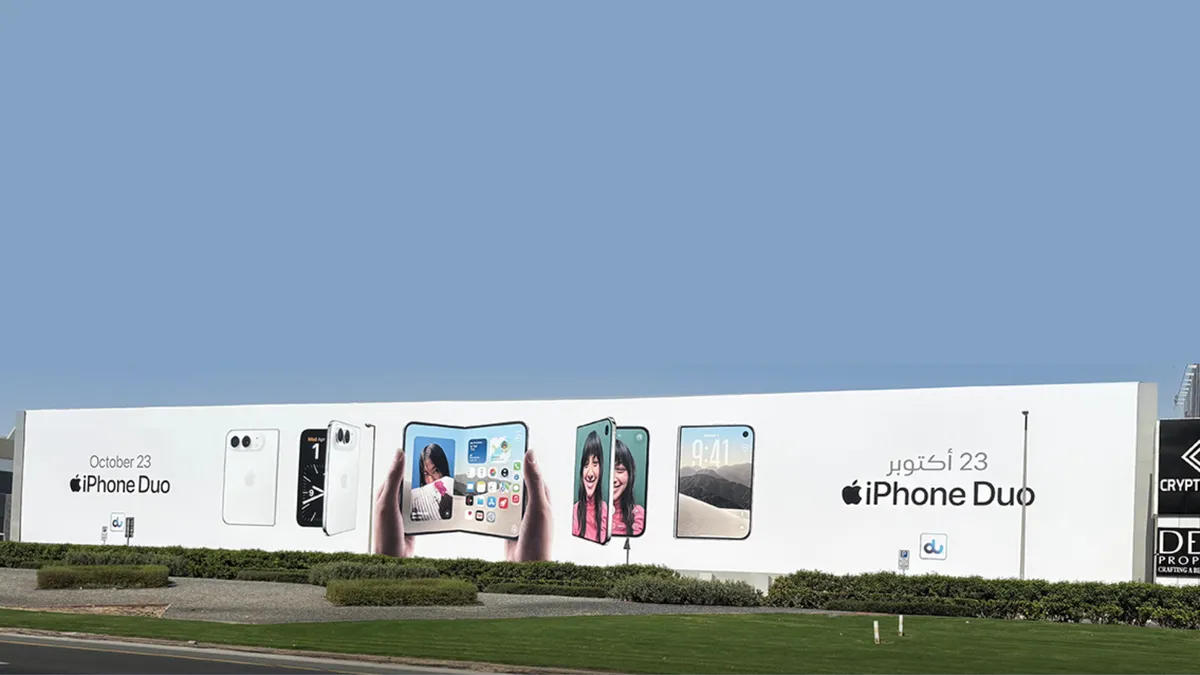
Apple Promotes iPhone Duo Across Dubai’s OOH Landscape
12 October 2026 · 5 min read
by Khuzaima Yamman
Apple brings the new iPhone Duo to Dubai’s outdoor advertising landscape ahead of its UAE launch on 23 October 2026.
Campaigns

Carvion Launches New Outdoor Campaign in Dubai
9 September 2026 · 3 min read
by Khuzaima Yamman
Carvion launches a new outdoor advertising campaign in Dubai, promoting its wholesale car export services with a clear bilingual message.
Campaigns
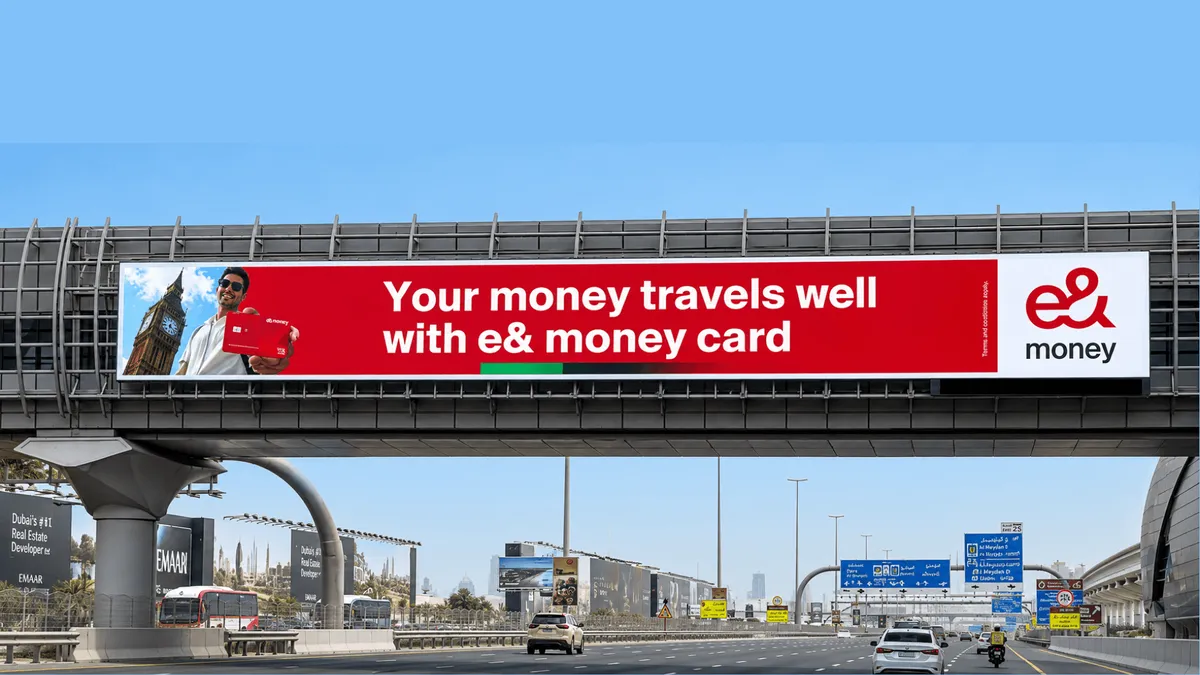
e& Promotes Money Card Across Dubai Screens
8 September 2026 · 3 min read
by Khuzaima Yamman
e& Money launches a new Dubai outdoor campaign promoting its card for international spending, using London imagery and a clear message around exchange rates and overseas payments.