Innovative Uses of Lamppost Advertising in Dubai
Discover how lamppost advertising in Dubai captures pedestrian attention with creative, high-visibility campaigns across the city's busiest zones.
by Dergham
26 October 2026 · 6 min read
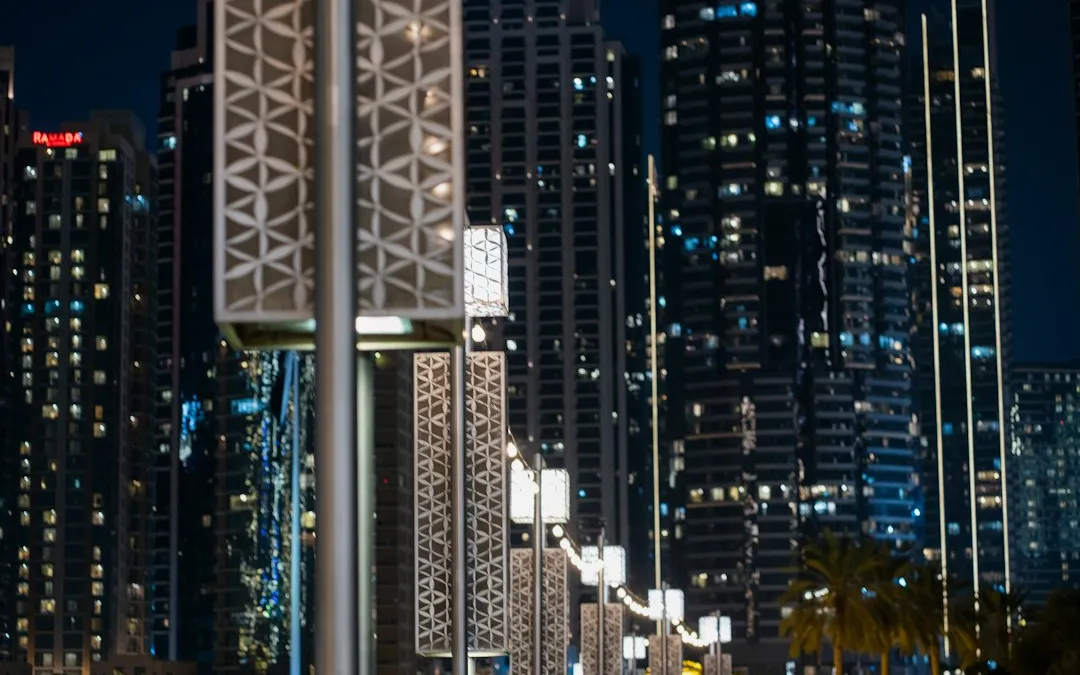
Walk down Sheikh Zayed Road, Jumeirah Beach Road, or any stretch of Dubai Marina Walk and you will pass dozens of lampposts without giving them a second glance. That is exactly what makes them such an interesting advertising surface. Brands in Dubai have started treating these everyday fixtures as a canvas for creative work that billboards and digital screens cannot quite replicate, and the results are reshaping how agencies think about pedestrian-level media.
Lamppost advertising Dubai campaigns succeed for a simple reason: they meet people where they are actually walking, not where they are driving past at 100 kilometres an hour. That difference in pace changes what a brand can say and how much detail a passer-by can absorb. It also opens the door to formats that reward a second look, which is where the more inventive campaigns have found their edge.
Why lampposts work differently to other outdoor formats
A billboard on a highway has roughly three seconds to land a message before the driver is gone. A lamppost banner on a mall pavement or a tram-adjacent walkway can hold attention for far longer, because pedestrians move more slowly and often pass the same spot repeatedly during a day. That makes lamp posts advertising Dubai placements well suited to layered messaging, seasonal storytelling, and designs that build curiosity rather than deliver everything in one glance.
These placements also sit at a different height and angle to the human eye than a roadside hoarding. A well-designed lamppost banner is read from below and from the side, which encourages vertical compositions, bold typography, and strong single images rather than dense copy. Brands that understand this distinction tend to get noticeably more out of the format.
Creative formats brands are actually using
The most effective lamppost campaigns in Dubai rarely rely on a static printed banner alone. Agencies have been experimenting with several approaches that push the format further.
Sequential storytelling along a route
Rather than repeating the same design on every pole, some brands design a run of banners that tell a story as a pedestrian walks past them in order, such as along a promenade or a route between a metro station and a mall entrance. Each lamppost reveals the next part of a tagline, a countdown, or a visual sequence. It turns a walk into a mini narrative and gives people a reason to keep looking rather than tuning out after the first pole.
Seasonal and event-tied wraps
Ramadan, national holidays, and major retail events such as Dubai Shopping Festival are reliable moments for lamppost dressing. Brands swap standard banners for festive artwork that matches the mood of the street, often coordinated with banners from the local authority or mall operator so the whole area feels dressed for the occasion rather than patchworked with unrelated ads.
Pairing lampposts with nearby digital or transit media
Some of the strongest campaigns do not treat the lamppost as a standalone unit. They use it as part of a sequence with a nearby digital screen, a bus shelter, or a tram wrap, so a pedestrian sees the same brand expressed across formats within a few minutes of walking. The lamppost becomes the quiet, repeated reminder that reinforces a bigger, flashier placement seen moments earlier or later.
Minimal, single-word or single-image designs
Because lamppost banners are narrow and viewed close up, the campaigns that read best tend to strip the message down to one word, one symbol, or one striking colour block, letting the brand logo do the rest of the work. This restraint often performs better than copy-heavy designs, simply because it is legible in a glance and still intriguing enough to prompt a second one.
Where lampposts fit in a wider OOH plan
Lamppost advertising rarely works best as a campaign's only format. It earns its place as a high-visibility layer within pedestrian zones, complementing larger formats such as billboards, mall media, and transit advertising rather than replacing them. A brand might run a headline message on a major billboard along a highway, then use lampposts near a mall entrance or metro exit to extend that message into the moment just before a purchase decision or a store visit.
This layering matters in Dubai specifically because the city's outdoor landscape is so varied. Shoppers moving between Dubai Mall, Mall of the Emirates, or City Walk pass through zones with heavy foot traffic, parking areas, and transit links all within short distances. Lampposts placed along these connecting routes catch people during the in-between moments that larger formats cannot reach, whether that is the walk from a car park to a mall entrance or the stretch between a tram stop and a beachfront promenade.
What makes a lamppost campaign memorable
The campaigns that stick in people's minds share a few traits. They respect the format's size and viewing distance instead of cramming it with information better suited to a billboard. They use colour and contrast deliberately, since lamppost banners often sit against busy backdrops of traffic, palm trees, and other street furniture. And they are timed to a specific moment, whether that is a holiday, a product launch, or a retail event, rather than running as generic brand awareness with no particular hook.
Consistency across a run of poles also matters more than brands sometimes expect. A single eye-catching banner is easy to miss in a busy street. A coordinated run of ten or twenty, spaced along a known walking route, builds a sense of presence that a single placement cannot achieve on its own.
Getting the format right for a Dubai audience
Dubai's pedestrian audience is genuinely mixed: residents on a daily commute, tourists exploring on foot, mall shoppers, and office workers on a lunch break all use the same stretches of pavement at different times of day. A lamppost design that works for one group does not automatically work for all of them, so the strongest briefs tend to think about where a route sits in the city and who actually walks it before settling on tone, language, or imagery.
For brands and agencies weighing up where lampposts fit against other out-of-home options, the honest answer is that they work best as a complement rather than a substitute. Used well, lamp posts advertising Dubai placements add a close-up, repeatable touchpoint that larger formats cannot provide, and that is precisely the gap they are built to fill in a city where people move between driving, walking, and transit within a single outing.
Ready to explore the vast OOH opportunities in the UAE?
Author: Dergham
Related articles
Advertising Formats
How billboards can increase footfall for businesses
29 June 2026 · 3 min read
by Khuzaima Yamman
Learn how billboard advertising can increase footfall by improving local visibility and encouraging nearby customers to visit your business.
Advertising Formats

Benefits of 3D Billboard Advertising for Brands
29 June 2026 · 4 min read
by Khuzaima Yamman
Discover the benefits of 3D billboard advertising, from attracting attention to supporting product launches and social media sharing.
Advertising Formats
How retail brands Use Billboard Advertising Effectively
29 June 2026 · 3 min read
by Khuzaima Yamman
Learn how retail brands use billboard advertising to build awareness, drive footfall, and connect outdoor campaigns with digital marketing.